02 July 2025

Guest post: Abolishing compulsory education

Extract from an article by Gene Epstein on City Journal:
In The Case Against Education, a persuasive indictment of his own industry, George Mason University economics professor Bryan Caplan quotes Harvard professor Steven Pinker ... ‘A few weeks into every semester,’ says the eminent psychologist and polymath, ‘I face a lecture hall that is half empty, despite the fact that I am repeatedly voted a Harvard Yearbook Favorite Professor, that the lectures are not video recorded, and that they are the only source of certain material that will be on the exam.’ ...

Such apathy is the norm. According to data cited by Caplan, 25 percent to 40 percent of college students don’t show up for class, even when attendance counts toward the grade. What share of the rest would bother to show up if that weren’t the case? As for high school students, for whom cutting class is a serious offense, two-thirds report being bored in class every day, according to a survey Caplan cites.

Caplan’s subtitle promises to explain ‘why the education system is a waste of time and money’. He exempts the teaching of essentials like reading, writing, and basic math, and professional and vocational programs that develop in-demand job skills. As for the rest of the curriculum, forget it. ‘Teach curious students about ideas and culture,’ he suggests. ‘Leave the rest in peace and hope they come around.’

The author floats some radical proposals for reform. One is a massive rollback of formal years of schooling that would retain emphasis on basic skills and on vocational education.
Professor Caplan’s ideas are in the right direction, but his proposals don’t go far enough.

Education in any form should stop being compulsory and State-monitored. Government and State authorities should get out of education altogether.

CHRISTINE FULCHER
co-author of:
Power-mad and Hypocritical: Why professors love Marxism

19 April 2025

Religion, Shelley and Milton

All basic religious ideas can be expressed in two forms: one personal and the other existential. In the first case the result is obnoxious, and in the second dangerous to common sense. The human race prefers to consider only the obnoxious versions, whether accepting or rejecting them. To do it justice, it must be admitted that it does not say that the existential versions are dangerous. For the most part it ignores them, and if they are forced upon its attention it calls them cold, negative, intellectual, metaphysical — and so on.

So you can say (but no one does): within the inconceivable there is scope for many orders of significance, each totally overriding those beneath it; and in particular, the reason for which existence exists must, in at least a certain sense, be more important than any purpose that can be formulated in terms of that which exists.

But in fact the nearest approximation to such an idea is stated — by someone like C.S. Lewis — in some such form as: God has super-fatherly rights to obedience from his creatures because he created them for his pleasure, not their own. This repellent situation leaves you a choice between emotional attitudes called ‘rebellion’ and ‘submission’. If you accept this formulation of the situation, there is virtually no scope for an existential reaction — i.e. for any reaction which releases your psychology from unrealism.

Since I have defined two characteristics of existential psychology — i.e. centralisation and open-endedness — you may see that it would be very hard to react to this situation in a way that had either of these qualities. Perhaps the best one could do would be a Shelleian attitude of anti-authoritarianism, which consists of a determination to be open-ended in spite of everything.

Milton’s Satan is half centralised and half reactive; insofar as he is centralised he is noticeably heroic. But Milton confuses two things, the existential and the personal. When Satan is heroic he might be seen as reacting to impersonal adversity in the spirit of Henley’s Invictus. When he is reactive he is just trying to do something that God won’t like — not because he, Satan, has any intrinsic reason for doing it. ‘Evil, be thou good’ means ‘I shall regard as good anything you think is evil’ — and this is in antithesis to the centralised position: ‘I shall regard as good what I regard as good, whatever you may think’.

(‘Reactive’ in my terminology means ‘directed towards producing an effect on other people in reaction to or against something they have previously done to you’.)

Extract from Advice to Clever Children.

17 February 2025

Hatred of intelligence

The late Professor Hans Eysenck once told me about an experiment in which a population of rats was divided into ‘bright’ and ‘dull’ on some criterion for rat intelligence. The rat offspring were then switched to different parents, in such a way that the bright rats were given the offspring of the dull rats to bring up, and vice versa. It was found that the bright rats brought up the dull rat babies successfully, while the dull rats killed the bright rat babies which they were given.

As Richard Dawkins points out in The Selfish Gene, natural selection encourages forms of behaviour which secure favourable conditions for the descendants of the individual in subsequent generations. So it looks as if it may be advantageous for the survival of a rat if the number of rats in the population it has to compete with, which are descended from parents cleverer than its own, is minimised.

The experiment suggests it may have become programmed into the genetic constitution of rats that they should kill, if possible, young rats which are cleverer than themselves. On the other hand, it appears rats have no programming to kill young rats which are less clever than themselves, presumably because their presence in future populations would pose no serious threat to their own offspring.

If natural selection has favoured such behaviour in rats to the point of modifying their genotype, we may speculate that it is even more likely to be present in the human constitution, since the range of opportunities present in human society, and the ways in which advantage may be taken of them, are even more varied, and offer greater potential advantages to those able to make use of them, than the variety of circumstances which may be made use of by rats of differing abilities.

Someone who becomes aware of this experiment may well be shocked by the result, and protest that it could not possibly be applied to humans. Professor Eysenck himself seemed to have resistance to the implication. He told me that anti-high-IQ behaviour would only prove adaptive for people in more developed societies, and thus could not have had time to modify the human genotype. His argument was that only in developed societies, with extensive business and finance activities, would having a higher IQ give the owner a sufficient advantage, to motivate other people to be hostile to him, or even kill him. This argument did not, however, make much sense to me, given that rats can scarcely be said to have ‘developed societies’ in this sense.

If there is a tendency in humans corresponding to the desire of rats to kill young rats cleverer than their own offspring, it would certainly help to explain the way the education system has developed as society has become progressively democratised. In spite of occasional nods to the supposed special needs of the ‘gifted’, the system is clearly geared (and increasingly so) to promoting the interests of the low-IQ population, and to making life well-nigh impossible for those of exceptional ability.

There is evidently a resistance to considering the possibility that the average human being may have hostile (potentially to the point of murderous) attitudes, whether conscious or not, to individuals of exceptional ability. Professor Eysenck told me that the results of this experiment became unavailable soon after it had been carried out — though he didn’t explain why — so it may be that they have never been published.

Previously posted in 2014 under the title ‘Killing bright rat babies’.

17 December 2024

The basic moral principle

Modern society has lost sight of the only moral principle of any importance, so that the individual citizen is basically unprotected against unlimited oppression.

Since the ignored principle is never enunciated, it is difficult to express one’s horror at what already goes on, and at even worse developments that might go on. If someone says, ‘People ought to be heavily taxed in order to pay for state-administered medicine and education’, I am shocked and horrified, but inhibited from replying: ‘People ought to be taxed as little as possible, and certainly not at all to provide funding for organised crime.’

Usually I do not reply in this way, because I realise that prolonged explanation would be necessary. In reality, at least as much explanation should be required to make plausible the idea that individuals should be taxed to provide for greater oppression of individuals by the collective, but one realises that a high proportion of the population has learnt to proceed smoothly to this conclusion without examination, or even recognition, of the underlying assumptions being made.

If I say that people should be taxed as little as possible, and least of all to finance collectively organised oppression, this depends on the basic moral principle that society should interfere as little as possible with the individual’s freedom to evaluate for himself the various factors which affect his existential situation, and to react to it as effectively as his resources permit.

The basic moral principle applies between individuals as well, and everyone should respect the right of others to evaluate for themselves the weighting to be placed on the factors which enter into any given situation, since in reality the existential situation is one of total uncertainty.

However, in practice it is only socially appointed agents of the collective, such as doctors, teachers, social workers, etc, who are invested with legally conferred powers to impose their valuations on others. They should be deprived of these (immoral) powers.

In the presence of the modern ideology, the deplorable practice has arisen of taking into account only factors which appear obvious to a large number of people, and of assuming that any others should be ignored.

In place of the basic moral principle enunciated above, an alternative one is implicitly assumed. This is to the effect that what is ethical consists of what the majority of people agree to regard as ethical. Dissenting individuals can, and should, be forced to submit to the views accepted by the majority of people in their society.

As people are subjected to continuous indoctrination in modern society, from the educational system, which increasingly regards indoctrination as a primary objective, and from the continuous stream of propaganda being put out by such media as television and newspapers, it is not surprising that there is a nearly universal tendency to prefer currently fashionable ways of evaluating things.

We may suppose that similar unanimities of evaluation were usually found in primitive tribal societies. This is notwithstanding the fact that a member of modern society, under the influence of the prevailing ideology, would tend to regard some of the practices of primitive societies as immoral. This however does not present itself to the modern mind as a problem, since there is an implicit belief that the human race has recently arrived at the best possible way of evaluating things, and that the way it thinks now is unquestionably right.

Extract from The Corpse and the Kingdom

25 October 2024

The melancholy of genius and its causes

guest post by Christine Fulcher

Havelock Ellis makes some interesting points about the personality features of geniuses in his book A Study of British Genius (1904).

Discussing the characteristics of men and women of genius, he writes:
This marked tendency to melancholy among persons of intellectual aptitude is no new observation, but was indeed one of the very earliest points noted concerning men of genius. ... It is not altogether difficult to account for this phenomenon. ...
He continues by suggesting that persons of intellectual aptitude tend to be anxious, and ill-adapted to society, and that these factors feed into their melancholy. He also mentions the sedentary and ‘nerve-exhausting’ nature of the kind of work in which they are likely to be engaged, such work producing or exacerbating ‘moods of depression’.

Finally, Ellis mentions one factor which tends to get ignored in modern explanations of the apparent predisposition of genius to suffering from ‘melancholy’:
Another cause that serves largely to accentuate the tendency of men of genius to melancholy is the attitude of the world to them. Every original worker in intellectual fields, every man who makes some new thing, is certain to arouse hostility when he does not meet with indifference.

He sets out on his chosen path ... content to work in laborious solitude and to wait, and when at last he turns to his fellows, saying, ‘See what I have done for you!’ he often finds that he has to meet only the sneering prejudices of the few who might have comprehended, and the absolute indifference of the many who are too absorbed in the daily struggle for bread to comprehend any intellectual achievement.
Havelock Ellis, A Study of British Genius, London: Hurst and Blackett, 1904, pp.220-222.

11 September 2024

Galton on ‘steady application and moral effort’

Francis Galton (1822-1911), from his book Hereditary Genius:
I have no patience with the hypothesis occasionally expressed, and often implied, especially in tales written to teach children to be good, that babies are born pretty much alike, and that the sole agencies in creating differences between boy and boy, and man and man, are steady application and moral effort. It is in the most unqualified manner that I object to pretensions of natural equality. The experiences of the nursery, the school, the University, and of professional careers, are a chain of proofs to the contrary.*
It seems, from Galton’s quote, that there were already in the Victorian era motives for suppressing facts about heredity. Perhaps the Victorians felt that the concept of innate talent would undermine their ideology that effort was virtuous and would be rewarded.

Galton argues, in passages following the one above, that no amount of effort or training will overcome large differences in innate ability.

* Francis Galton, Hereditary Genius: An Inquiry into its Laws and Consequences, University Press of the Pacific, 2001, p.56, italics added.

13 July 2024

The impoverishment of the English aristocracy

P.G. Wodehouse was one of the most widely read humorists of the 20th century. His most famous fictional creation was Jeeves, the knowing and somewhat manipulative valet to feather-brained young gent Bertie Wooster.

In the following extract from Wodehouse’s 1953 novel Ring for Jeeves, Jeeves has temporarily become butler to the impoverished Earl of Rowcester.

[Lord Rowcester:] ‘I haven’t a bean.’

[Jeeves:] ‘Insufficient funds is the technical expression, m’lord. His lordship, if I may employ the argot, sir, is broke to the wide.’

Captain Biggar stared.
‘You mean you own a place like this, a bally palace if ever I saw one, and can’t write a cheque for three thousand pounds?’

Jeeves undertook the burden of explanation.

‘A house such as Rowcester Abbey, in these days is not an asset, sir, it is a liability. I fear that your long residence in the East has rendered you not quite abreast of the changed conditions prevailing in your native land.
   Socialistic legislation has sadly depleted the resources of England’s hereditary aristocracy. We are living now in what is known as the Welfare State, which means — broadly — that everybody is completely destitute.’

From: The Jeeves Omnibus Volume 3, Hutchinson, 1991, p.98.

22 May 2024

The work ethic and its decline

I have noticed over the last forty years that it has become more and more difficult to find anyone willing to do useful work in a polite and efficient manner.

Dissident sociologist David Marsland commented on the work ethic in his 1988 book Seeds of Bankruptcy:
Max Weber's The Protestant Ethic and the Spirit of Capitalism has been subject to extensive criticism ever since its publication in 1904-5. Some of this criticism is certainly valid. It remains, nevertheless one of the few genuine contributions by sociology to the advance of real knowledge. Its fundamental insight into the requisite institutional and psychological underpinnings of capitalism remains to this day incontestable.

What Weber enunciated — indeed celebrated — was the indispensable role in the development of capitalism of active and positive attitudes to work, and of values justifying such attitudes. Surely he was right. Among the prerequisites of the survival of liberal democratic capitalism, none is more essential than systematic, enthusiastic commitment to effortful work on the part of at least a large proportion of the population.

Commitment to the work ethic presupposes in its turn a number of other characteristics in any society which intends to become or remain capitalist, and to avoid entrapment in feudalistic, authoritarian, socialist, or other forms of serfdom. [Each of those characteristics] has been increasingly subject to attack in recent decades. Sociologists, as evidenced by the teaching material I have examined, are in the front rank of anti-capitalist critique of work and the work ethic. Undermining work is one of the major effects of the arguments deployed by sociologists in their prejudiced, negative treatment of business, freedom, and capitalism.*

A recent Daily Telegraph article was entitled ‘How the UK lost its work ethic’. The following is an extract.
‘Once they enter the workplace, the British are among the worst idlers in the world. We work among the lowest hours, we retire early and our productivity is poor. Whereas Indian children aspire to be doctors or businessmen, the British are more interested in football and pop music.’

So said a now notorious passage in the 2012 book Britannia Unchained, co-authored by Liz Truss, Kwasi Kwarteng, Dominic Raab, Priti Patel and Chris Skidmore. Naturally, headlines were made by such an accusation, not least because the British have traditionally prided themselves on their ability to graft, assisted by a temperate climate and an ingrained national culture of invention and ingenuity.

But it seems all that may be on the slide. Last week, Andy Haldane, the Bank of England’s former chief economist, stated that a ‘sandwich generation’ aged between 35 and 50 were footing the bill for younger and older generations who had dropped out of the workforce. An ever-diminishing number of earners is alarming enough, but then the Wall Street Journal reported that many corporate leaders advocate that employees should never give more than 85 per cent, as complete dedication is unsustainable and leads to burnout.
* David Marsland, Seeds of Bankruptcy, Claridge Press, 1988, p.54.
Chart taken from B. Duffy et al, ‘What the world thinks about work’, Kings College London, 2023.

27 March 2024

Laughter

A young graduate who had read English at Oxford, and with whom I was corresponding, once referred to jokes about ageing. Certainly they are common.

The first thing one notices about them is that they all depend on the implicit or explicit introduction of ‘other people’ into the situation. In some way or another, they all say, ‘I am living out a life-cycle as other people have done before, or as my contemporaries are also doing now.’ I do not think you could make a joke out of being the first or only person to find himself enmeshed in the conditions of mortality.

Two questions arise: what makes this reference to the widespread occurrence of mortality funny, and how is one to account for its sedative effect? (Plainly, the effect of the joke is one of reconciliation to the situation, rather than a spur to action.)

Freud would no doubt claim that the funniness arose from the reference to an underlying anxiety. The behaviourists would no doubt say that a thing was funny if accompanied by the action of laughing. I don’t feel particularly enlightened by either suggestion. There is only one nonsane joke: it is about attempting the impossible. It is extremely hilarious, but I do not think that it resembles any form of sane funniness. There is one other existential form of laughter: this is the laughter of relief. Again, I cannot feel that it sheds light on sane humour.

I will hazard a guess why sane people make jokes about growing old. What the joke means is ‘I am as degraded as everybody else, but at least everybody else is as degraded as I am.’ This is funny in the same way that other references to one’s concealed hatred of other people are funny, and it explains why the joke functions as a sedative. (‘At least I can see everyone else rotting at the same time I do; at least I can hear them screaming while I’m being tortured myself...’)

Come to think of it, does not all sane humour depend on references to one’s concealed hatred of other people? My studies of the Reader’s Digest certainly suggest this. ‘Human relationships’ seem to consist of continual reminders that your ‘friend’ sees you as identified with your most degrading limitations. (But loves you just the same, of course. That is, he wants you to be like that.)

Extract from Advice to Clever Children, pp.74-75.

26 January 2024

Genes and social class

It has been estimated that the proportion of a person’s intelligence which is inherited from his or her parents is upward of 50 percent.

However, there is great resistance to the idea of heritable intelligence.

A theory popular with some academics is that Victorian and Edwardian middle-class intellectuals believed in heritability because it fitted with the view that the class structure of society was fine as it was. Francis Galton, author of the 1869 book Hereditary Genius, is among those accused of defending this view. Galton was the first to study twins to determine the relative contributions of ‘nature versus nurture’, a phrase he coined. In a 2001 paper on Galton,* David Burbridge quotes history professor Simon Szreter who claims that:
‘Galton provided an important new intellectual leadership for the view that factors of heredity, and not environment, were the source of all observable class and race differences. ... Galton himself was almost exclusively interested in social class differentials in British society. [He was] one of the principal ideologues and champions of a professional meritocracy as providing the constitutional ideal for British society ... his hereditarian, professional model was the paradigm English meritocratic representation of social structure.’
Using the pejorative term ‘ideologue’, Professor Szreter makes Galton sound like an apologist for the class structure of Victorian Britain.

However, David Burbridge points out that whatever Galton’s private views on this issue were, in his public writings he was wary of making assertions of the kind that Professor Szreter attributes to him.
... nowhere does Galton put any weight on his study of twins to support a claim for a hereditary basis of the differences between social classes. But what in fact were Galton's views on heredity and social class? It is surprisingly difficult to answer this question. Galton’s published comments on social class are few and scattered. Nor, at least until very late in his career, do his private notes and correspondence show much interest in the structure of British society.
Academics hostile to the idea of heritability may find it useful to paint a picture of their opponents as dogmatic, and biased by personal interests. At least in Galton’s case, this picture, David Burbridge argues, is wrong.
[Galton’s] apparent reluctance to engage in any explicit and extended discussion of social class and social mobility may have stemmed from an awareness that quantitative data were lacking. On at least two occasions he called for investigations in this area. At some point Galton himself appears to have planned an enquiry into social mobility.

* David Burbridge, ‘Francis Galton on Twins, Heredity and Social Class’, British Journal for the History of Science, 34, pp.323-340. The quotation by Simon Szreter is taken from his book Fertility, Class and Gender in Britain 1860-1940, Cambridge University Press, 1996.

30 October 2023

Genes, leadership and monarchy

The idea that ability is partly inherited continues to be controversial, for reasons that seem to have more to do with ideology than scientific evidence.

If ability does in general have a heritable component, this would go some way towards explaining the existence of social classes.

Hereditary monarchy was for many centuries the most common form of political system, and the heritability of talents may help to explain this.

In 2013, researchers at University College London published evidence that leadership ability does have a genetic basis. Jan-Emmanuel De Neve at the UCL School of Public Policy commented as follows on the paper* by him and his colleagues which appeared in The Leadership Quarterly:
We have identified a genotype called rs4950, which appears to be associated with the passing of leadership ability down through generations [...] The conventional wisdom — that leadership is a skill — remains largely true, but we show it is also, in part, a genetic trait.

* Here is a link to the full paper:
https://www.sciencedirect.com/science/article/pii/S1048984312000811

13 October 2023

Two brief essays on education

Good parents
In order to be a socially approved parent it is necessary not to ‘push’ your child. There is a social myth to the effect that great harm (of a quite unspecified kind) can be done by ‘pushing’ children.
   There is no corresponding myth about any harm that can be done by frustrating children; in fact, of course, ‘frustrating’ a child is not a possible concept. Even if it were ever admitted that a child had not been given opportunities for developing its abilities, this cannot possibly have done them any harm. This follows from the general principle that no social action towards an individual has any harmful consequences.

Benevolence
Once upon a time a headmistress said of me, ‘It will be good for her not to be treated as an exception.’ I found it very difficult to understand how she could even imagine that she honestly meant something by this, let alone something benevolent, since the sentence seemed to me to have the status of ‘It will be good for this horse to be treated as a dog’. The use of the word ‘good’ in particular eluded me, until I reflected that there was in existence an expression ‘The only good Injun is a dead Injun’, and no doubt she meant something like that.

Taken from: The Corpse and the Kingdom.

06 September 2023

The cult of creativity

One weakness of the pursuit of creativity is that it focuses attention on what seems to you to be significant (which admittedly is the only way you have of evaluating what might be significant), so that the tension between the subject or observer and external (unknown) reality is relatively weakened.

This is clearly why creativity is so popular as an educational catchword. If everyone tries to do some multiplication exercises, there is an objective standard of what constitutes doing it right. People will succeed differentially, and get some feeling of their limitations vis-a-vis objective reality.

But if everyone is told to paint or write creatively, and express themselves, no comparison with an external standard arises in any obvious way. It is a popular educational position nowadays to ‘encourage’ children to write what they feel, and worry about the niceties of grammar and punctuation when they have become good enough at self-expression. Of course, they never do get round to the grammar or punctuation.

Another drawback of the pursuit of creativity, or ‘interest’, is that there is little scope in life for this sort of ‘interest’, and a population of people who have been persuaded that they should despise everything that isn’t ‘interesting’ is very much at the mercy of society. To get anything purposeful done seldom requires a great deal of inspirational activity, but does require a lot of activity of a kind which is by no means ‘interesting’ in itself. This is the way reality is.

02 August 2023

Out-of-the-Body Experiences

My colleague Charles McCreery has recently published his book on out-of-the-body experiences. This is available from Amazon.

Here are links to the Amazon UK page:
www.amazon.co.uk/dp/1916090656
and the Amazon USA page:
www.amazon.com/dp/1916090656

The book should appeal to anyone interested in any of the following topics:
• out-of-the-body experiences
• hallucinations and apparitions
• lucid dreaming


08 July 2023

The common good?

Here is another extract from Ayn Rand’s book Capitalism: The Unknown Ideal. Rand expresses scepticism about the ‘common good’, a concept popular with collectivists.
“The common good” is a meaningless concept, unless taken literally, in which case its only possible meaning is: the sum of the good of all the individual men involved. But in that case, the concept is meaningless as a moral criterion: it leaves open the question of what is the good of individual men and how does one determine it?

It is not, however, in its literal meaning that that concept is generally used. It is accepted precisely for its elastic, undefinable, mystical character which serves, not as a moral guide, but as an escape from morality. Since the good is not applicable to the disembodied, it becomes a moral blank check for those who attempt to embody it.

When “the common good” of a society is regarded as something apart from and superior to the individual good of its members, it means that the good of some men takes precedence over the good of others, with those others consigned to the status of sacrificial animals. It is tacitly assumed, in such cases, that “the common good” means “the good of the majority” as against the minority or the individual. Observe the significant fact that that assumption is tacit: even the most collectivized mentalities seem to sense the impossibility of justifying it morally. But “the good of the majority,” too, is only a pretense and a delusion: since, in fact, the violation of an individual’s rights means the abrogation of all rights, it delivers the helpless majority into the power of any gang that proclaims itself to be “the voice of society” and proceeds to rule by means of physical force, until deposed by another gang employing the same means.

26 April 2023

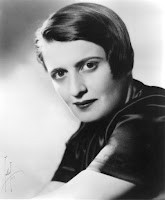
Ayn Rand

Ayn Rand was the pen name of Alice O’Connor (born Alisa Zinovyevna Rosenbaum), a Russian-American writer and philosopher. Her most notable works were the novels The Fountainhead (1943) and Atlas Shrugged (1957).

Rand condemned the initiation of force as immoral, and opposed statism and collectivism, but was also against anarchism. She was in favour of laissez-faire capitalism, and was one of the strongest supporters of liberty in her time.

The following quote is from her 1966 book Capitalism: The Unknown Ideal.
In a capitalist society, all human relationships are voluntary. Men are free to cooperate or not, to deal with one another or not, as their own individual judgments, convictions, and interests dictate. They can deal with one another only in terms of and by means of reason, i.e., by means of discussion, persuasion, and contractual agreement, by voluntary choice to mutual benefit. The right to agree with others is not a problem in any society; it is the right to disagree that is crucial. It is the institution of private property that protects and implements the right to disagree and thus keeps the road open to man’s most valuable attribute (valuable personally, socially, and objectively): the creative mind.

13 March 2023

New book: The Corpse and the Kingdom

My new book, The Corpse and the Kingdom, is now available from Amazon.

Below is an extract.


SECOND INTRODUCTORY SCENARIO

What you are perceiving seems to be a physical universe and it seems to be possible to infer certain things about the past history of this universe. It is possible to suppose that your consciousness is a by-product of physical and chemical events in your organism, and that other people are conscious in a similar way to yourself as a result of similar events in their organisms.

The human race, of which you are a part, seems to have been on the planet on which you are living for a very small part of the inferable history of the physical universe. The lifetime of the human race, and the space it occupies, is infinitesimal even in relation to the time and space that the human race is able to infer in the physical universe that surrounds it. It is inferred that there may be millions of other stars as well able to possess life-bearing planets as our sun. It is inferred that previous life forms on this planet, such as the dinosaurs, occupied it for tens of millions of years.

The human race has a strong tendency to believe that what the human race regards as good and valuable is of great importance. What is important to a human being (and in what other sense could the word important have meaning) is to be determined by reference to the local consensus of belief about what is important in the social environment which surrounds that human being.

Amazon UK
Amazon USA
Amazon Canada
Amazon Australia

13 January 2023

Are schools bad for people?

Extract from chapter ‘Dozing in the staff room’, in:

It’s your time you’re wasting: A teacher’s tales of classroom hell, by Frank Chalk (pseudonym):
The group [of teachers] on the next table are discussing one of the ‘Please make me famous, I’m desperate’-type programmes that seem to be on the telly every night these days. When I first started teaching, and we’re not talking in the Dark Ages, most teachers were reasonably serious-minded people who wouldn’t have given a moment’s thought to this tripe. Now the staff room is littered with dog-eared copies of Heat, OK and Garbage (OK, I made the last one up). The group [of teachers] chatting about the show seem quite fascinated by it; at least, they show a working knowledge of the various characters and their moronic machinations.

I must admit I really cannot understand this mad desire to be famous, although I know it inhabits almost every single one of my pupils. I can understand people wanting to be rich, because it increases the options available to you and should, in theory, take away financial worries (although no doubt it brings its own problems). But the desire to be known by everyone strikes me as plain weird.*

* Frank Chalk, It’s your time you’re wasting, Monday Books, 2006, p.66.

01 November 2022

Children and Mill’s principle of liberty

J.S.Mill (1806-1873)
As quite a young child, I was under the impression that it was a basic principle of accepted morality and legislation that an individual’s freedom of action should not be restricted except in so far as his actions might impinge upon the freedom of others. A century ago this principle was to a large extent respected. Provided you kept the law you could make your own decisions, subject to the resources and opportunities you had, and could try to enlarge your resources and opportunities. The law, it is true, violated the principle by including some moral elements, such as a prohibition of homosexuality, which could scarcely be justified as restraining the infringement of the liberty of others, as between consenting adults. A law of this kind was evidently based on psychological grounds, that people doing things of this kind might generate disapproval in others, and persons should be protected from having to feel such things.

Although the modern world has repealed the penalties for homosexuality between consenting adults, this is scarcely likely to have been out of concern for individual liberty; more likely the repeal was made because sex is the modern opium of the people, it being supposed that if they are encouraged to fill their lives with such harmless distractions they will not notice more serious oppressions.

Nowadays legislation is frequently justified on statistical grounds: that we must bring about a state of affairs in which society as a whole is the way we (that is, the legislators) would like it to be. I first noticed this when a law was brought in prohibiting the taking of what are now called GCSEs before a person’s sixteenth birthday. Even at the time, and before I realised how serious the effects of this would be on my own educational prospects, I thought this to be surprisingly immoral legislation. Surely a person was not doing anyone else any harm by taking an exam younger than the average? The only harm you could be said to be doing was psychological: it might make other people jealous. But then the acquisition of any benefit in life might make other people jealous. If you started to take psychological considerations such as this into account you could plainly justify practically any restriction of individual freedom of action. What other people would like best would be to see you living a dull, unambitious life, enlivened only by such diversions as they permitted themselves, such as the aforementioned opium of the people.

30 September 2022

The basic moral principle — II

Part 1 of ‘The basic moral principle’ is here.

Having stated the basic moral principle, it can be seen that it is freely violated in modern society.

What destroyed my education, and has made it impossible for me to recover from the effects of that destruction ever since, was not au fond the hostility and oppressiveness of any particular individuals, but the intrinsic immorality of the modern ideology. My parents were operating in an environment in which there was no shortage of people to prescribe to them how they should regard me.

The legislation which prevented the taking of the School Certificate and other exams before a certain age was a clear violation of the basic moral principle. It was denying to the individual who might be taking exams, or to his parents who were supposed to be considering his interests, the right to evaluate for himself how serious were the advantages or disadvantages, in an existential perspective, and in view of his individual characteristics and outlook, of taking an exam of a certain kind at a particular age.

People’s lack of sensitivity to this basic principle of morality, even so soon after the Second World War when the Welfare State had been in force for only a few years, was shown by the fact that even supposedly conservative newspapers found no fault with the legislation. Protests were made on behalf of a few children who were clearly going to be prevented from taking exams that they were well able to take, but newspaper articles which discussed such individuals were only too willing to impose solutions of their own, on the lines of ‘If he/she is so clever, he/she can easily pass the time reading books/playing chess/doing good works.’

This shows that the willingness to impose solutions and interpretations on other people’s lives was already well developed. No doubt it always has been, and that is why there is little hope of the basic moral principle being upheld, except in a free-market society in which an individual can defend himself against other people’s ideas of what he ought to want by paying with money for what he does want.

Of course, the young person is necessarily at a disadvantage so long as he has to depend on decisions being made on his behalf by a parent, and even more so if he is dependent on decisions being made by someone who has not even some sense of genetic bonding with him. One of the things which would have saved my education from complete disaster, so that its inverse could be said to be the cause of its ruin, would have been an age of legal majority which was related to mental rather than chronological age. On the most conservative estimates of my IQ, I would certainly have been, on that basis, of age and free to make decisions for myself well before the School Certificate situation arose.

Clearly those most likely to be disadvantaged by the age-limit legislation were the most precocious (in those days it was not yet explicitly stated that there was no such thing as precocity). So this legislation conveyed to all and sundry that there was no need to take into account any special individual requirements that might arise from special ability. This was treated as implying also that the possibility of any special needs arising from unusually extreme individual characteristics should not on any account be entertained. The latter is pretty much the principle that has been applied to me throughout my life. Could it be that people realise that ignoring the particular requirements which arise from outstanding ability is a good way of providing it with the handicaps which are desirable to cancel the likelihood of its possessor being able to make use of it? Of course by now it has become acceptable to assert that there is no such thing as precocity or outstanding ability anyway. At that time people liked to refer gloatingly to cases of child prodigies who had ‘fizzled out’. The implication of this was not that they had not retained their ability, but that some strange innate deficiencies had rendered them unfunctional in later life. From time to time throughout my life, including quite recently, I have read newspaper articles quoting educational ‘experts’ as remarking on the number of early high achievers who finish up without an academic career. This is supposed to constitute a proof that this is a perfectly natural outcome, but it might just as well be taken as a demonstration of the hostility towards them, and their consequent inappropriate treatment by the educational system.

Some twenty years ago, in connection with the then fashionable proposals for the further deterioration of the university system, Professor Andrew Oswald of Warwick University was quoted* as saying, ‘Why exactly should Britain’s plumbers and secretaries and telephone operators have to pay for you to come to Warwick? You will earn far more than them. You will have much more interesting jobs.’ This shows how hopeless it is to expect the state to provide for the differing needs of individuals. In reality, there are many factors, of which measurable IQ is only one, which affect the circumstances and types of activity which an individual needs for his well-being. It is impossible to quantify the weighting of these factors in an individual case, and it is a violation of the basic moral principle to impose conditions on him which take into account only very few factors.

And, supposing (as I do) that IQ and other innate characteristics strongly influence the individual’s aptitudes and temperament, let us remember how heavily outnumbered by the majority of the population at large is the minority (about 3%) even with IQs above 130, at which level a child is (or used to be) referred to as ‘gifted’. Really outstanding IQs, at a level which used to be described as ‘near genius’ or ‘potential genius’, constitute a tiny minority of the ‘gifted’ population. So how can it possibly be expected that a democratic society will provide adequately for the needs of, say, the top 1% of the population, of whom the remaining 99% are jealous, and whose success and well-being they resent?

* The Times, 31 May 2000.

31 July 2022

The power of the lie

The power of society depends on the power of the lie. The power of the lie is very great.

The power of the individual depends on the right of possession and the sanctity of facts. Neither of these is recognised by society. It is only under capitalism that there is a recognition of the individual’s right to the facts. He has a right to the facts about his possessions. Consequently facts are themselves regarded as possessing a certain value. In a socialist society no one has any right to the facts. There is no point in facts at all. The power of the state, which is the sole good, is best safeguarded by there being no facts.

People are subjective, but some people are more subjective than others and those who believe in society are the most subjective of all. This is because they have abandoned to society their right to assess facts for themselves, in return for the power that society will give them over others. The high priests of society are social workers, doctors and psychiatrists. Their function is to convince others that they are being subjective if they venture to criticise society.

25 May 2022

The evolution of education

There is a sense in which the authoritarian figures of a socialist society are far more authoritarian than those of a capitalist one. To illustrate this, let us consider the development of authority in the educational system, and the state of affairs regarded as acceptable at the present time.

In a primitive society there is no education in the modern sense. The child joins in activities designed to produce food and so on more or less as soon as he is able, and acquires practical skills from his elders as he goes along.

Education starts to arise when some individuals become rich enough to release their children in their early years from attending to physical necessities, and are either free enough themselves to teach them such things as languages and arithmetic, or can pay for someone to devote his time to doing so. So when teachers arise in the course of a developing civilisation they do so first as paid employees, or even slaves, of the parents.

As civilisation develops further, various charitable and communal efforts may be made to provide an education for at least some of those whose parents are not providing it for them, but this is clearly an imitation of what the parents who do provide for their children’s education see fit to provide.

Finally it is recognised that the amount of effort people are prepared to make to educate other people’s children voluntarily is incommensurate with people’s ability to produce children to be educated; and the task of supplementing the private educational system is passed to the state, with its unlimited power to confiscate money from individuals.

This causes a great change in the status of the persons in roles of authority within the educational system. They are no longer the servants of the parents, they are agents of the collective, and they will feel free to assume a position of superior wisdom where parents are concerned, and even to interfere at will between parents and children.

The final stage in this process is not quite with us at the time of writing. The private educational system, shrunken by taxation and restrictive legislation as it is, is still present and provides a standard of comparison. By this standard it may be perceived that state schools may be very good at generating the right social attitudes and at interfering in people’s lives, but private schools are still better at setting people up to succeed in life, with a higher standard of academic attainment and possibly certain psychological characteristics which result from a less degraded environment. It is therefore regarded as desirable that this standard of comparison should be eliminated altogether, and whatever is provided as education in state schools should be the only standard of what education can be.

12 March 2022

The Romany Rye

George Borrow (1803-1881) was an English author who was contemporary with novelists such as Charles Dickens and George Eliot. Well-known in his day, and celebrated for several decades after his death, he is now somewhat neglected.

Borrow is best known for two semi-autobiographical novels (Lavengro and its sequel The Romany Rye) which feature, among many encounters with colourful characters, his relationships with members of the Romany folk, whose language he learnt. I read these two books when I was eight and was very struck by them.

The passage below, taken from the Appendix to The Romany Rye and written by Borrow, may convey some of the flavour of the books.
Lavengro is the history up to a certain period of one of rather a peculiar mind and system of nerves, with an exterior shy and cold, under which lurk much curiosity, especially with regard to what is wild and extraordinary, a considerable quantity of energy and industry, and an unconquerable love of independence.

It narrates [the hero’s] earliest dreams and feelings [...] his successive struggles, after his family and himself have settled down in a small local capital, to obtain knowledge of every kind, but more particularly philological lore; his visits to the tent of the Romany chat and the parlour of the Anglo-German philosopher; the effect produced upon his character by his flinging himself into contact with people all widely differing from each other, but all extraordinary; his reluctance to settle down to the ordinary pursuits of life; his struggles after moral truth; his glimpses of God and the obscuration of the Divine Being to his mind’s eye; and his being cast upon the world of London, by the death of his father, at the age of nineteen. [...]

In the country it shows him leading a life of roving adventure, becoming tinker, gypsy, postillion, ostler; associating with various kinds of people, chiefly of the lower classes, whose ways and habits are described; but, though leading this erratic life, we gather from the book that his habits are neither vulgar nor vicious, that he still follows to a certain extent his favourite pursuits — hunting after strange characters, or analyzing strange words and names.
Illustration from Lavengro
(by E.J. Sullivan)
Those who read this book with attention — and the author begs to observe that it would be of little utility to read it hurriedly — may derive much information with respect to matters of philology and literature [... The book] is particularly minute with regard to the ways, manners, and speech of the English section of the most extraordinary and mysterious clan or tribe of people to be found in the whole world — the children of Roma.

08 December 2021

Beethoven’s housekeeper

Beethoven had a housekeeper.* She did the cooking and housekeeping while he composed music. I am sure the modern view of the matter is that Beethoven did not need a housekeeper, or, if he did, he should not have done. Plainly, they should both have composed music, and both have cooked their own meals. The fact that Beethoven composed music better than the housekeeper could have done is beside the point. It is the business of society to iron out these unfair advantages of endowment, not to enhance them. Why should the housekeeper not have had just as much chance to practise creative self-fulfilment?

It is interesting to observe that the housekeeper could probably have composed music just as well in the intervals of her cooking and housekeeping as she could have done if she had had all day free to devote to thinking about music. Beethoven, on the other hand, probably could not have composed nearly as well as he did if he had had to do so part-time. This proves that the housekeeper had a better social adjustment than Beethoven, and is all the more reason why Beethoven should not have received preferential treatment.

* The housekeeper’s name was Sali.

(Extract from The Corpse and the Kingdom, due for publication in 2022.)

22 October 2021

G.I. Gurdjieff

G.I. Gurdjieff
George Gurdjieff (d. 1947) was a mystic who believed in the possibility of a higher state of consciousness, and who tried to convey a method for reaching that state. Although he published several books, his ideas are best approached via the work of his pupils, particularly that of Peter Ouspensky. In his book In Search of the Miraculous, Ouspensky tells of his meeting Gurdjieff in Saint Petersburg in 1915 and of how he spent several years trying to learn from him techniques for overcoming ‘mechanical’ psychology.

Central to the teaching of Gurdjieff is the idea that the normal human personality is largely mechanical, and that the ego falsely imagines itself to be in control, and able to make choices, while in reality it is merely reacting predictably to impulses. In order to make genuine choices, Gurdjieff held, it is necessary to develop radically different psychology, which requires first overcoming the delusion that you are already in control.
I asked G. what a man had to do to assimilate this teaching.
   ‘What to do?’ asked G. as though surprised. ‘It is impossible to do anything. A man must first of all understand certain things. He has thousands of false ideas and false conceptions, chiefly about himself, and he must get rid of some of them before beginning to acquire anything new. Otherwise the new will be built on a wrong foundation and the result will be worse than before.’
   ‘How can one get rid of false ideas?’ I asked. ‘We depend on the forms of our perception. False ideas are produced by the forms of our perception.’
G. shook his head.
   
‘Again you speak of something different,’ he said. ‘You speak of errors arising from perceptions but I am not speaking of these. Within the limits of given perceptions man can err more or err less. As I have said before, man’s chief delusion is his conviction that he can do. All people think that they can do, all people want to do, and the first question all people ask is what they are to do. But actually nobody does anything and nobody can do anything. This is the first thing that must be understood.
   Everything happens. All that befalls a man, all that is done by him, all that comes from him — all this happens. And it happens in exactly the same way as rain falls as a result of a change in the temperature in the higher regions of the atmosphere or the surrounding clouds, as snow melts under the rays of the sun, as dust rises with the wind.
   Man is a machine. All his deeds, actions, words, thoughts, feelings, convictions, opinions, and habits are the results of external influences, external impressions. Out of himself a man cannot produce a single thought, a single action. Everything he says, does, thinks, feels — all this happens. Man cannot discover anything, invent anything.
   It all happens.
   To establish this fact for oneself, to understand it, to be convinced of its truth, means getting rid of a thousand illusions about man, about his being creative and consciously organizing his own life, and so on. There is nothing of this kind.
   Everything happens — popular movements, wars, revolutions, changes of government, all this happens. And it happens in exactly the same way as everything happens in the life of individual man. Man is born, lives, dies, builds houses, writes books, not as he wants to, but as it happens. Everything happens. Man does not love, hate, desire — all this happens.
   But no one will ever believe you if you tell him he can do nothing. This is the most offensive and the most unpleasant thing you can tell people. It is particularly unpleasant and offensive because it is the truth, and nobody wants to know the truth.
   When you understand this it will be easier for us to talk. But it is one thing to understand with the mind and another thing to feel it with one’s “whole mass,” to be really convinced that it is so and never forget it.’
P.D. Ouspensky, In Search of the Miraculous, Harvest Books, 2001, pp.20-21.

18 August 2021

Richard Church’s levitation experience

Richard Church (1893-1972)
Richard Church was a poet and novelist who was particularly active during the 1930s and 1940s. Perhaps his best known work of prose is the semi-autobiographical trilogy consisting of the novels The Porch, The Stronghold and The Room Within.

Church became better known in later life for his childhood autobiography, Over the Bridge. In this, he recounts two phenomena which he experienced while spending time in a convalescent home (he was prone to poor health as a child).

The first experience involved the perception of time.
One heavy morning, when the outside world was iron-bound with frost, I stood at a long french window in the play-room waiting to go down to breakfast. The sun was just risen beyond the ground, and stood above the lawns, his great red disk etched with naked twigs of the bushes. Under these bushes a gardener was chopping down a dead tree. I watched him. The axe flashed red, and fell. It rose again. The movement, steady and sure, fascinated me. Suddenly I realised that the sound of the blows did not synchronise with what I saw. The thud came when the axe was on an upstroke, ready for the next blow.

I disbelieved the evidence of my eyes. Then I thought my spectacles (those miracle workers) must have betrayed me; or that my illness had begun to affect my vision. I stared intently, screwing up the eye-muscles against any possible intrusion of light or irrelevant image. But the picture I saw and the sound I heard remained disparate. Then, while I stared, knowledge came to me; the knowledge that follows a recognition of fact, of concrete experience, bringing with it a widening both of the universe and of the individual's understanding of it. [...] I had found that time and space are not absolute. Their power was not law. They were not even unanimous; they quarrelled with each other; and through their schism the human imagination, the hope, the faith, could slip, to further exploration where intuition had formerly hinted, but where logic and fatal common sense had denied.
Church continues by describing a second experience, involving him apparently levitating.
Since time and space were deceivers, openly contradicting each other, and at best offering a compromise in place of a law, I was at liberty to doubt further, to carry on my exploration of the horizons of freedom. Still conscious of the warm blood whispering in my veins, I looked down at my wrist and saw the transparent flesh, the bird-bones, the channels of blue beneath the skin. All this was substance as fragile as a plant. It could not possibly outweigh the solid earth under my feet, where I and the rest of duped mankind walked with such docility. [...] I sensed, with a benignancy deeper and more assured than reason, that my limbs and trunk were lighter than they seemed, and that I had only to reduce them by an act of will, perhaps by a mere change of physical mechanics, to command them off the ground, out of the tyranny of gravitation.

I exerted that will, visualising my hands and feet pressing downwards upon the centre of the earth. It was no surprise to me that I left the ground, and glided about the room (which was empty) some twelve or eighteen inches above the parquet floor. At first I was afraid of collapsing, of tumbling and hurting myself. But I had only to draw in a deep breath, and to command the air through the heavy portions of my anatomy, watching it flow and dilute the solid bone and flesh through the helpful chemistry of the blood, this new, released and knowledgeable blood, and I soared higher, half-way to the ceiling. This thoroughly frightened me, and I allowed myself to subside, coming to ground with a gentleness that was itself a sensuous delight.

I could not leave the matter there. I must put my discovery to the test again, and accordingly I drew in a deep breath and was just about to visualise that downward pressure of will upon body, when the door opened, and a nurse came in.

'Why, little boy?' she said. 'Haven't you heard the breakfast bell?'

Then she took a second glance at me, stooped and peered into my face. 'Is anything wrong? Are you feeling poorly this morning?'

I was almost indignant, and disclaimed the suggestion that I might have a temperature, for that would mean going to bed in the large ward where a pail stood conspicuously in the middle, on a sheet of mackintosh; an improvisation which disgusted me.

I hurried away without replying, leaving the nurse looking after me with some inquiry in her manner. The corridor and staircase were empty, for everybody was at breakfast in the vast dining-room below. Here was another opportunity! I drew my breath again, I scorned the liars of time and space, I took the presence of Christ into my hollow, featherweight bones, and I floated down the staircase without touching either tread or baluster. Alighting outside the dining-room door, I entered and took my seat, content now to live incognito amongst these wingless mortals.

Extracts taken from Richard Church, Over the Bridge, London: Heinemann, 1970, pp.170-173.

13 June 2021

Mary Somerville, Scottish polymath

Mary Somerville, born Mary Fairfax in 1780, was a Scottish scientist, known particularly for her books on astronomy and other physical sciences. Somerville College in Oxford is named after her. However, when I was at Somerville there was little sign of her in the college. I came across no portraits of her, and none of the undergraduates I knew seemed aware of who the college was named after.

In spite of the limited availability of education for girls at the time, Somerville seems to have seized her opportunities whenever they arose. For example, when she heard a teacher advising another (male) student to read Euclid’s Elements, she decided that she should do so too, as it would help her understand a textbook on navigational theory.

Her inheritance from the death of her first husband gave Somerville the freedom to pursue intellectual interests. She started to make a name for herself in 1811 when she was awarded a medal for solving a mathematical problem.

In 1827 Somerville was hired to translate Laplace’s Mécanique Céleste. She produced an expanded version of the first two volumes which was published as The Mechanism of the Heavens. This book made her famous, and remained a textbook for undergraduates until the 1880s. Somerville’s second book, On the Connexion of the Physical Sciences, sold over 10,000 copies and consolidated her reputation in physical science.

When Mary Somerville died in 1872, she was described in an obituary as the ‘queen of science’.

17 April 2021

A shortage of domestic servants in 1909

Extract from pamphlet Canada wants domestic servants, issued by Canada’s Minister of the Interior in 1909:
The domestic servant problem is to-day one of the most serious questions which the Canadian ladies have to deal with, and it would be beneficial alike to the employer and employee if a large number of female domestics should decide at once to emigrate to the Dominion.

[In the four years 1904-1907] the number of domestics arriving in Canada from the British Isles has been [over fifteen thousand] but this number would not have a noticeable effect in decreasing the demand even if all had remained in service, while as a matter of fact a very large percentage enter the matrimonial state shortly after their arrival and in turn become themselves mistresses requiring help in their household duties.
Extract from section ‘Letters from satisfied domestics’:
Dear Sir:
   Just a line or two to let you know how I am getting on since I came out to Virden in the spring. I like Canada very much, and can’t write too highly about the people in the district, they are all so kind to us strangers. There are fifteen of the girls who came out on the “Corinthian” round about Virden, and all liking it well. Virden is a fine clean little town and one man or woman is considered as good as another.
   It is about the way I was treated lately when I was ill that I wish to tell you particularly. I was in a situation and took typhoid fever and I don’t know who was the kindest to me. I was sent to the hospital at Brandon by the St. Andrew’s Society of Virden, who got a semi-private ward for me and when I was better they paid off the hospital and doctors’ expenses and the Government paid the rest, so I was not out one cent. It was almost good to be ill to see people so kind, for although the doctor would not allow visitors, the Brandon ladies sent in the most lovely flowers to me and nearly every day some one was telephoning and enquiring for me. I am all right again and able for work.
   There are far more people wanting help than there are girls for. I would like so much for my two sisters to come in the spring. Three of the Edinburgh girls who came out with me are in Brandon. I got my baggage all right and we had a nice trip out. I have been long in writing to tell you how I am getting on, but time passes so quickly. Believe me,
   Yours truly,
   Annie Cameron

28 February 2021

Lawrence of Arabia

Extract from Advice to Clever Children, about the modern obsession with qualifications.
T.E. Lawrence (1888-1935)
In the University of Oxford there used to be more understanding than there is now of the fact that there were a lot of ways in which a person of very high ability could get disconnected from his education, but that this ability might still be too good to waste. T.E. Lawrence, as he approached his final examinations in history, regarded himself as unprepared for them; and it may be doubted whether he would have got a First if a tutor, sympathetic to his evident ability, had not drawn to his attention the possibility of offering a thesis on a subject of special interest to him to supplement the usual papers, and been instrumental in arranging finance for an expedition necessary for the proposed thesis.

There was always a certain tradition that colleges could, and sometimes did, if they knew a person had very high ability, disregard his examination results and make it possible for him to continue his academic career. When I was an undergraduate there was a story about a certain Professor who had got a Fourth, but had still gone on with his academic career and arrived at his present eminence.

Even while I was at college a case occurred of a girl who got a Third, but the dons liked her and thought she was suited to doing research, so she duly got a research scholarship. Of course, with the advance of socialism and the increased dependence of the colleges (or, strictly speaking, the university) on state finance, the tendency is for nothing to matter except exam results, regardless of how they have been brought about.

10 January 2021

‘Man should become God’

In the Eastern Orthodox Church, a key idea is that man should become God, and that the universe will become deified with him.

Here are some quotations from Vladimir Lossky’s The Mystical Theology of the Eastern Church* which illustrate this idea.
Man, according to St. Basil, is a creature who has received a commandment to become God.

Man was created last, according to the Greek Fathers, in order that he might be introduced into the universe like a king into his palace.

God became man in order that man might become god, to use the words of Ireneus and Athanasius, echoed by the Fathers and theologians of every age.


* Vladimir Lossky, The Mystical Theology of the Eastern Church, James Clarke 1957, reprinted 1968. Quotations are taken, respectively, from pages 124, 111 and 134.

08 December 2020

Bishop Berkeley: is there an external world?

George Berkeley (1685-1753)
George Berkeley, born in 1685 at Dysart Castle in County Kilkenny, and Bishop of Cloyne from 1734 to 1753, wrote a philosophical analysis of materialism which has been the subject of controversy since its publication.

Berkeley attacked the belief in material objects that underlay the prevailing scientific model of the world. He argued that there was no basis for a belief in physical objects or an external world, and that we should think of all objects as being mental.
It is indeed an opinion strangely prevailing amongst men, that houses, mountains, rivers, and in a word all sensible objects, have an existence, natural or real, distinct from their being perceived by the understanding. But with how great an assurance and acquiescence soever this principle may be entertained in the world; yet whoever shall find in his heart to call it in question may, if I mistake not, perceive it to involve a manifest contradiction. For what are the forementioned objects but the things we perceive by sense? And what do we perceive besides our own ideas or sensations; and is it not plainly repugnant that any one of these or any combination of them should exist unperceived? *
Modern philosophers have tended to marginalise Berkeley because his views appear to be radically at odds with the conventional scientific worldview. Bertrand Russell, for example, took Berkeley’s arguments seriously but felt justified in dismissing them.
In one sense it must be admitted that we can never prove the existence of things other than ourselves and our experiences. No logical absurdity results from the hypothesis that the world consists of myself and my thoughts and feelings and sensations, and that everything else is mere fancy. [...] There is no logical impossibility in the supposition that the whole of life is a dream, in which we ourselves create all the objects that come before us. But although this is not logically impossible, there is no reason whatever to suppose that it is true; and it is, in fact, a less simple hypothesis, viewed as a means of accounting for the facts of our own life, than the common-sense hypothesis that there really are objects independent of us, whose action on us causes our sensations.

The way in which simplicity comes in from supposing that there really are physical objects is easily seen. If the cat appears at one moment in one part of the room, and at another in another part, it is natural to suppose that it has moved from the one to the other, passing over a series of intermediate positions. But if it is merely a set of sense-data, it cannot have ever been in any place where I did not see it; thus we shall have to suppose that it did not exist at all while I was not looking, but suddenly sprang into being in a new place. **
In these extracts from his book The Problems of Philosophy, Russell mentions some of the apparent problems of Berkeley’s thesis. It seems natural to one to suppose that, during the time between seeing the cat the first time and seeing it the second time, something exists which one can label as ‘the cat’, even if no one is having sensory experiences involving this inferred cat. However, the fact that positing such an independent entity may seem natural, or convenient, does not constitute philosophical proof.

* George Berkeley, A Treatise Concerning the Principles of Human Knowledge, in A.J. Ayer & R. Winch (Eds.), British Empirical Philosophers, Routledge and Kegan Paul 1952, p.179.
** Bertrand Russell, The Problems of Philosophy, Williams & Norgate 1912, pp.30-36.

22 September 2020

guest post: Christine Fulcher on schools

Below is a post by my colleague Christine Fulcher, giving some of her views on education.
The headmaster of my primary school made great play of the fact that he was in loco parentis. He told us that this was how his legal position vis-à-vis the pupils of the school was described, and that this was Latin for ‘in place of the parent’. In other words, he was acting as a substitute parent during the hours we were attending that school. Well, if parents were responsible people, they would not be willing to let other people act in loco parentis in this way.

The fact that education is compulsory is an indictment of parents who want an easy life for themselves with their children out of their hair, rather than what is best for their children. If so-called education were not compulsory and supposedly ‘free’ at point of delivery (but not really free, being paid for out of taxation) then people might be more cautious about bringing children into the world.

As for the so-called ‘right’ of children to be educated: those who create ‘rights’ have their own agendas, which are not necessarily in the interests of those to whom they are giving these ‘rights’. The fact that it is generally in the interests of people to be able to read, write and do basic arithmetic is expanded into the idea of compulsory education, then forced upon children, who have no choice.

If education were not compulsory, a certain number of people might grow up unable to read, write or do basic arithmetic. But this is a lesser evil than that created by making ‘education’ compulsory. Much of modern education does not consist of ‘stuffing children’s minds with facts’, but of stuffing their minds with propaganda. This is not a modern phenomenon. Those who wish to spread any sort of propaganda, religious or atheist, have always been interested in using compulsory education of the young as a means of doing this.

Christine Fulcher

15 August 2020

Metachoric experiences

metachoric experience = experience in which the whole of a subject’s visual field is replaced by a hallucinatory one

Our research on lucid dreams, false awakenings and out-of-the-body experiences highlighted the capacity of the brain to generate experiences which provide a convincing replica of normal perceptual experience.

In lucid dreams, the subject appears to be relatively ‘normal’ in terms of cognitive faculties, as evidenced by the fact that he has awareness of his actual state, i.e. that he is asleep and that the experiences he is having are hallucinatory. In false awakenings, the subject appears to ‘see’ a convincing replica of his normal bedroom environment. He may then see monsters or other figures of various kinds, apparently superimposed on this otherwise faithful replica, although in fact the whole of the visual field is of course hallucinatory. In out-of-the-body experiences (OBEs) the subject is typically awake but appears to be seeing his environment from the wrong perspective — often as if from a point of view above his head. Again, the brain appears to be generating a highly convincing replica of the normal environment, visually speaking.

In the case of OBEs, there is also the observation that the hallucinatory state can apparently be entered with little or no awareness that a discontinuity has taken place from (a) actually seeing the environment to (b) hallucinating the same environment, albeit from a different perspective.

These experiences suggested a departure from the previous idea of a hallucination as an isolated area of the visual field which was generated erroneously by the brain, and then somehow superimposed on the rest of the visual field which was generated from actual input in the normal way.

Certain features of our research on apparitional cases — cases where an apparitional figure or object is seen against the background of the normal environment — led us to the possibility that many apparitional experiences, and possibly all of them, were analogous to lucid dreams and OBEs in being totally hallucinatory. That is to say, rather than the experience consisting of normal perception plus a finite hallucinatory element (the two elements being integrated in some way), the perceptual environment is entirely replaced by a hallucinatory one, at least as long as the apparitional figure is being perceived.

In our 1975 book Apparitions we proposed the term metachoric to designate such experiences in which the normal perceptual environment is entirely replaced by a hallucinatory one.

Celia Green
Charles McCreery

Read more

29 July 2020

Tribalism and ethics

The essential feature of ethics — that is to say, respect for the right of the individual to have what he wants and to decide for himself what is of importance to him, so long as it is not interfering with the rights of others to pursue what they consider important for them — arose in association with capitalism. It was an ethic that could only arise when individuals had at least the potentiality of paying for what they wanted within the structure of the society they lived in.

This ethic has been nominally taken over by the modern trend towards tribalism. We will retain the great advances in knowledge and control of our environment which were made when collective control was somewhat weakened, but we will not consider it moral for individuals to pursue whatever goals they consider conducive to whatever sort of wellbeing they choose for themselves, unless we happen to agree with them. (‘We’ is a vague collective entity consisting of social agreement about what is right and proper.)

We aim to remove freedom, so far as we can, but we sweeten the pill by confirming our belief in the ‘individual’. Indeed, we respect the ‘individual’ more than ever before and complain that the previous state of society had too little of this respect. But when the nature of this ‘respect’ is formulated, it does not come out to anything so simple and absolute as respect for other people’s power to decide; it comes out as a concern for their well-being, based on some sort of ‘balanced’ assessment of their total wants and needs. By implication this is an assessment that we will make, not them, and ‘balance’ provides a lot of scope for overriding a person’s strongest inclinations if our respect for them is ‘balanced’ by our respect for something else that they should be inclined to want instead.

Extract from the forthcoming book by Celia Green, The Corpse and the Kingdom, due to be published in 2021.